
Zone 0 Fire Hazard Checker
California's Zone Zero law (AB 3074) requires non-combustible or fire-resistant fencing within 5 feet of your home if you're in a designated fire hazard zone.
Not sure if that includes you?
Enter your address below and we'll check it against fire hazard zone data from the City of San Diego, Poway, and CAL FIRE. Takes about 10 seconds.
We check City of San Diego, Poway, and CAL FIRE zone maps to find the most accurate classification for your property.
Checking fire hazard severity zones for your address...
What is Zone 0?
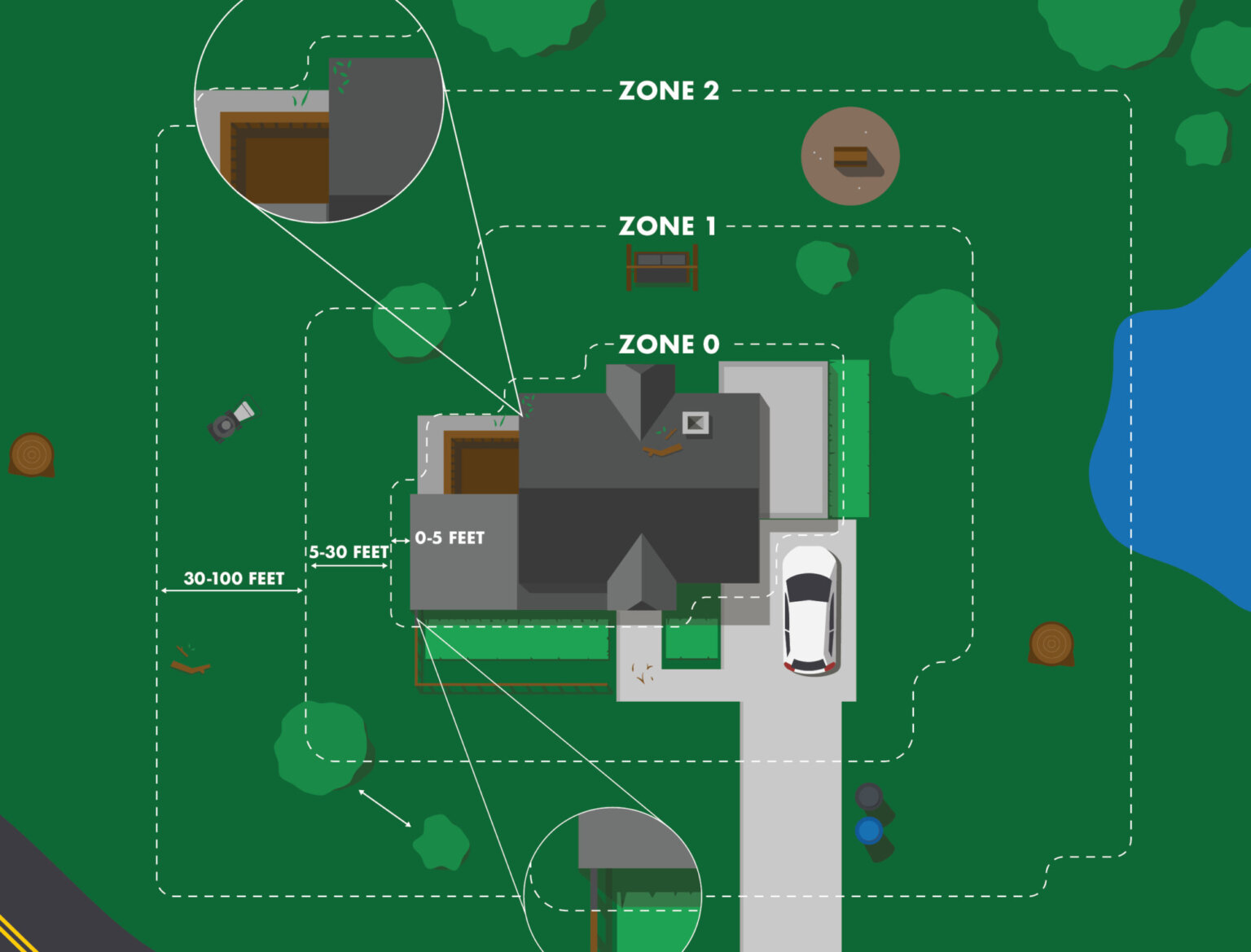
Zone 0 is the 5-foot perimeter directly around your home. Under California AB 3074 and SB 504, homes in fire hazard zones must use non-combustible or fire-resistant materials in this area. That includes fences, gates, and arbors. Wood and composite must be replaced. Vinyl can stay in certain configurations (perpendicular to the wall, 5+ feet from doors/windows). Aluminum, steel, wrought iron, ASTM-tested fire-rated wood (FRTW), and masonry all qualify.
Disclaimer: This tool uses public fire hazard severity zone data from the City of San Diego (SANDAG), City of Poway, and CAL FIRE / OSFM for informational purposes only. Zone boundaries may be updated as local jurisdictions adopt new maps. Always verify with your local fire authority or building department for official determinations and current compliance deadlines. Insurance requirements may differ from building code requirements.
Why We Built This Tool
California passed AB 3074 in 2020 and SB 504 in 2024 to create Zone 0, a 5-foot defensible space buffer around every home in a designated fire hazard zone. Anything combustible within that buffer needs to go. For most homeowners, the biggest question is simple: does this apply to me?
That's what the checker answers. It pulls your address from City of San Diego, Poway, and CAL FIRE map data and tells you your fire hazard severity zone in about 10 seconds. If you're in a Very High or High zone, it also tells you what steps to take next.
For the full breakdown of what Zone 0 means for your fence, material options, and pricing, head to our fire-resistant fence installation page.
Which San Diego Neighborhoods Are Affected?
A big chunk of San Diego County falls within state-designated fire hazard zones. The inland and foothill communities are hit hardest, but parts of the coast are included too. Here are some of the areas where Zone 0 compliance is likely required:
North County Inland
- Poway, Rancho Bernardo, 4S Ranch, Rancho Peñasquitos
- Escondido (eastern portions), Valley Center, Fallbrook
- San Marcos (eastern hills), Vista (inland areas)
Coastal and Central
- Scripps Ranch, Tierrasanta, San Carlos, Allied Gardens
- Rancho Santa Fe, Del Mar (canyon areas), Carmel Valley
- La Jolla (Torrey Pines area), Clairemont (canyon edges)
East County
- El Cajon, Lakeside, Ramona, Julian, Alpine
- Santee (eastern areas), Spring Valley (hillside properties)
- Jamul, Dulzura, and unincorporated mountain communities
This is not a complete list. Fire hazard zones are mapped at the parcel level, so your neighbor might be in a different zone than you are. That's why we built the checker above. Enter your address and get a definitive answer.
What to Do If Your Home Is in a Fire Hazard Zone
If the checker shows your home is in a Very High or High fire hazard zone, here's what you need to know and what to do next.
1. Figure Out What Needs to Change
Walk your property and look at everything within 5 feet of the house, garage, and any attached structures (decks, pergolas, carports). Wood and composite fencing in that zone needs to be replaced with a non-combustible material. Vinyl has a conditional exception in San Diego. Existing Vinyl can stay within Zone 0 if the fence runs parallel to the structure, sits at least 4 feet away, and is maintained free of debris with no vegetation between fence and house. Perpendicular fences need non-combustible material for the first 5 feet. Your insurance company may not allow vinyl within Zone 0 regardless of orientation. Vinyl running perpendicular to the wall or near an opening must be replaced. Same goes for wood gates, arbors, or trellises attached to the home.
2. Know That You Probably Don't Need a Full Replacement
Zone 0 only covers the first 5 feet from the structure. If your fence runs 50 feet along a property line but only the first 5 feet are within Zone 0, you only need to replace that section. Partial Zone 0 replacement is most of what we do. We swap out the section closest to the house with aluminum or wrought iron and tie it into your existing fence. It saves money and gets you compliant without tearing out a perfectly good fence.
3. Pick the Right Material
For most homeowners, aluminum is the best fit. It's non-combustible, doesn't rust (important in San Diego's coastal air), looks clean, and has a modern look and feel. It also meets California pool fence code, so if you're solving two problems at once, aluminum handles both.
Steel and wrought iron work well too, especially for perimeter security. Fire-retardant treated wood (FRTW) that meets ASTM E84 testing is also approved, though it's a specialty product. Masonry walls are another option but they're more expensive and require a different kind of contractor.
4. Get Ahead of the Deadline
The state deadline for VHFHSZ properties is January 1, 2027, and January 1, 2028 for High fire hazard zones. Local jurisdictions like the City of San Diego may adopt their own timelines or additional requirements. Check with your local building department for the most current schedule. Either way, fence contractors in San Diego are going to get slammed as deadlines approach. Getting a quote now means you can budget for it, pick your schedule, and avoid the rush.
For pricing questions check out our post covering fence pricing by material inlcuding pricing for zone zero fencing optoins.
Why San Diego Homeowners Call JJ’s Fence
JJ's Fence Company has been building and replacing fences across San Diego since 2020. We're a veteran-owned, family-run crew. Jared runs the jobs, Cindy handles the office, and the team shows up on time and finishes the work right. That's not a pitch. Go read the reviews.
Here's what we bring to Zone 0 projects specifically:
-
- We know what's actually required. Zone 0 compliance isn't one-size-fits-all. We look at your property, measure the 5-foot buffer, and tell you exactly what needs to change. No guessing, no overselling.
- We do partial replacements. If only 5 feet of your fence falls in Zone 0, we replace just that section and tie it into the rest. You keep your existing fence where it's allowed.
- Aluminum is our specialty. We install aluminum fences across San Diego every week. We know the material, we know how it handles slopes and uneven terrain, and we know what the HOAs in your neighborhood will approve.
- Fast turnaround. Most residential Zone 0 jobs wrap in one to two days. We give you a real timeline upfront and stick to it.
- Licensed, insured, veteran-owned. CA License #1122878. Fully insured. Jared served before starting the company. That's how we run things.
Frequently Asked Questions
How does the Zone 0 Checker work?
It cross-references your address with fire hazard zone data from the City of San Diego (SANDAG), City of Poway, and CAL FIRE's statewide maps. When you enter your address, the tool geocodes it and checks local sources first for the most accurate classification, with CAL FIRE as a statewide fallback.
Is the Zone 0 Checker accurate?
The tool checks local San Diego and Poway fire hazard zone maps first, then falls back to CAL FIRE's statewide data. Local maps often include city-specific re-designations that the statewide data doesn't reflect yet. That said, zone boundaries can be updated, and parcel-level determinations should be confirmed with your local building department before starting any work.
What types of fences don't pass Zone 0?
Wood and composite fences are combustible and don't qualify for the 5-foot buffer around your home. Vinyl has a conditional exception: existing vinyl can stay if it runs parallel to the structure, at least 4 feet away, kept clear of debris with no vegetation between the fence and the house. If the checker shows you're in a Very High or High zone and you have non-qualifying materials within 5 feet of the house, they'll need to be swapped for aluminum, steel, wrought iron, or masonry. Fire-retardant treated wood (FRTW) meeting ASTM E84 standards is also approved.
Does my whole fence have to go?
Probably not. Zone 0 only covers the first 5 feet from the structure. If your fence runs 40 feet along the property line, only the section closest to the house needs to change. The rest can stay. Use the checker above to confirm your zone, then call us for a free assessment of what actually needs replacing.
What are the Zone 0 deadlines?
The state deadline for VHFHSZ properties is January 1, 2027. High fire hazard zone properties have until January 1, 2028. Local jurisdictions may adopt different timelines, so check with your building department for the most current date. The checker above tells you which zone you're in.
I got my result. What should I do next?
If you're in a Very High or High zone, the next step is figuring out what needs to change on your property. Call JJ's Fence at (858) 285-4085 or fill out the quote form above. We'll come out, measure the 5-foot buffer, and give you a straight price for the replacement. No cost, no obligation.
Will my insurance go up if I'm not compliant?
We can't speak for your insurer, but homeowners in fire hazard zones are already seeing higher premiums and non-renewals. Having a compliant, non-combustible fence is one piece of evidence you can present to show your property meets defensible space standards. It won't guarantee lower rates, but it removes one risk factor your insurer can point to. Keep in mind that insurance requirements may differ from building code requirements. Your insurer may require non-combustible materials even where code allows vinyl.
Get a Free Zone 0 Assessment
Not sure where to start? Call us at (858) 285-4085 or request a free quote online. We’ll come out, measure your Zone 0 buffer, tell you exactly what needs to change, and give you a straight price. No pressure, no surprises.