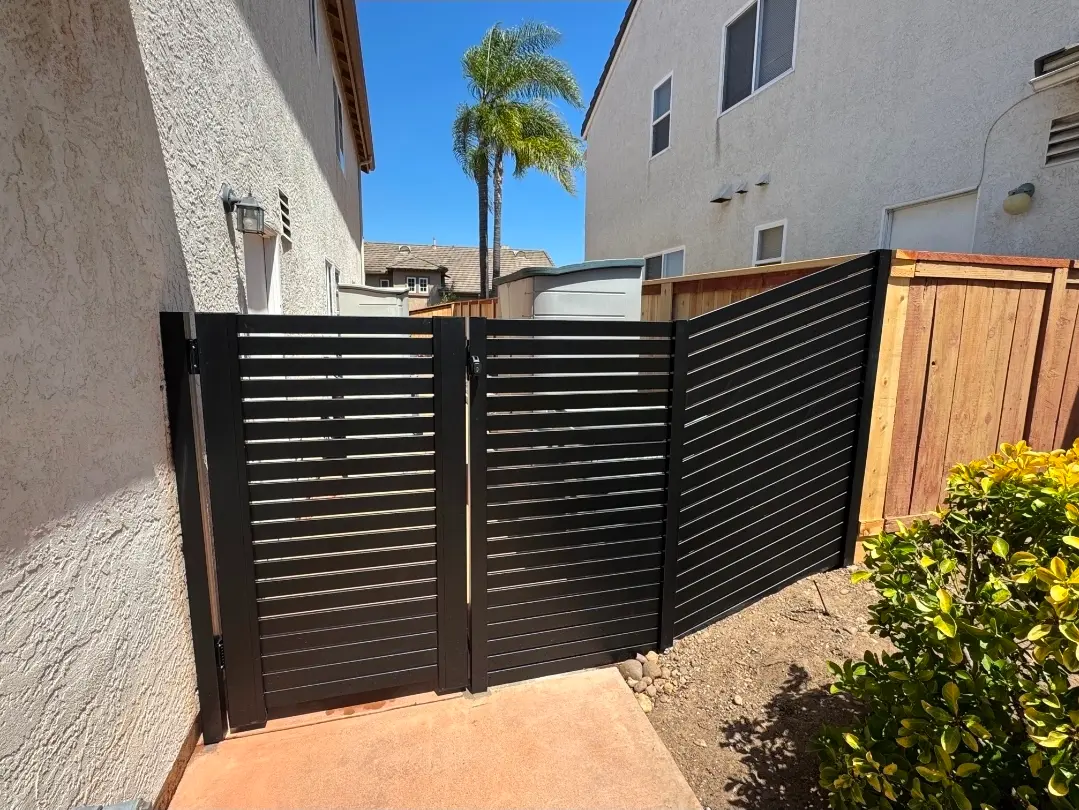
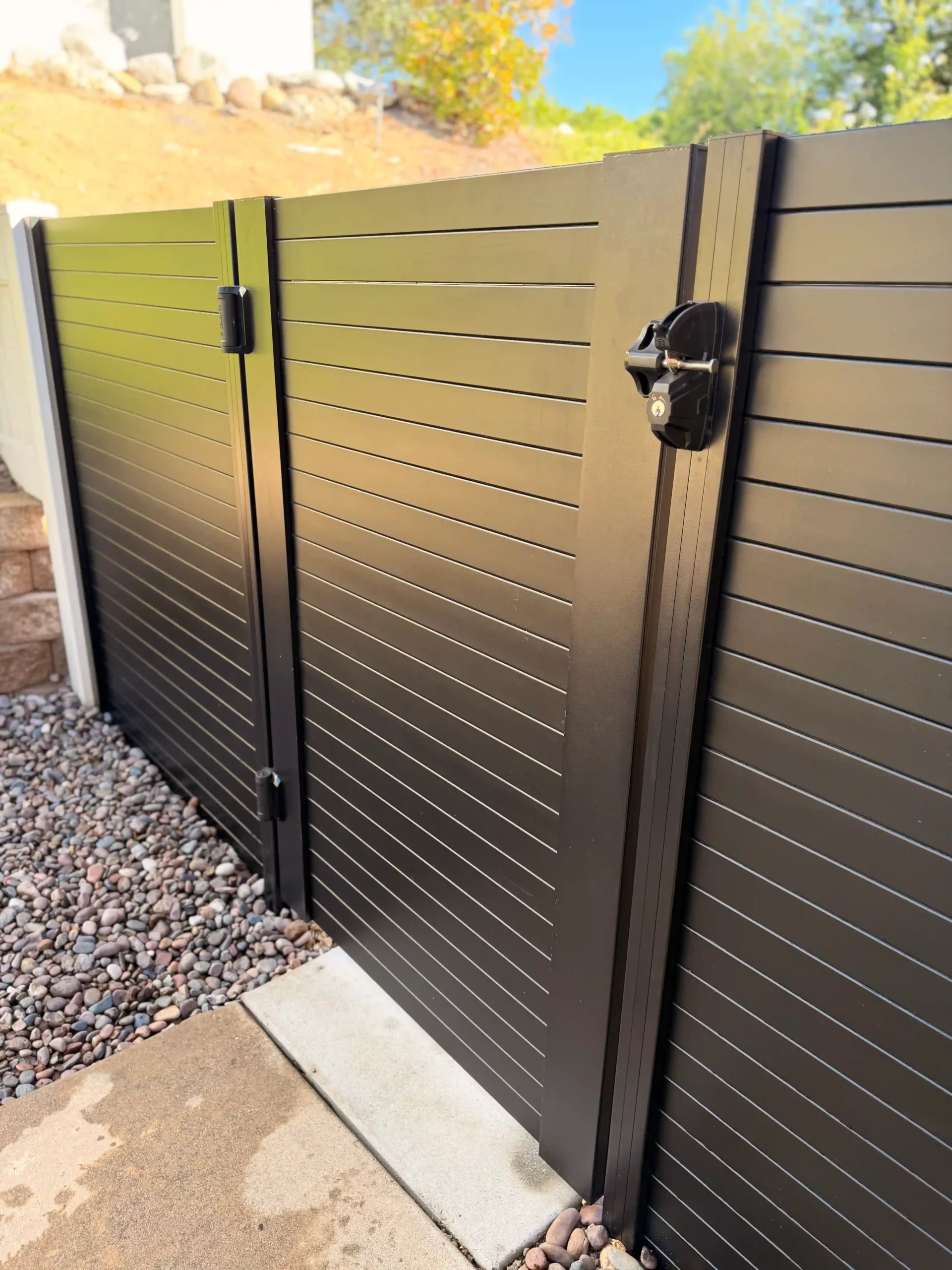
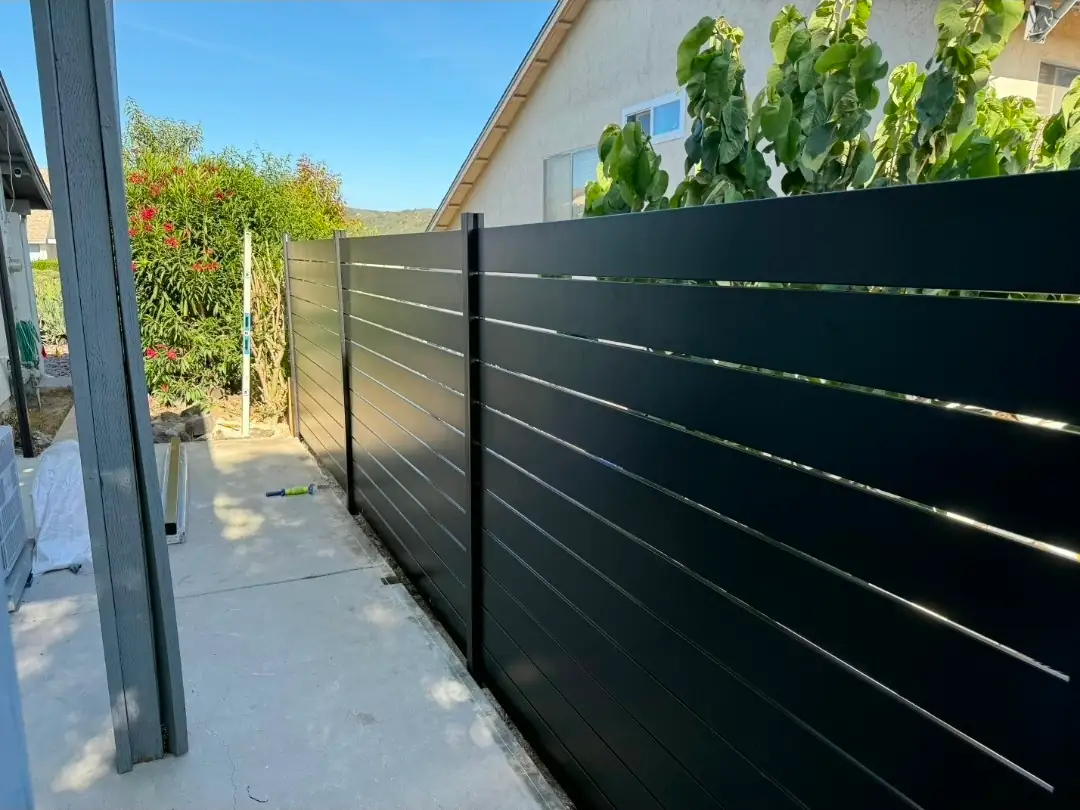
If you own a home in San Diego and your fence is within 5 feet of the house, you need to read this.
California passed two laws, AB 3074 in 2020 and SB 504 in 2024, that created something called Zone 0. It's a 5-foot buffer directly around your home where everything has to be non-combustible or fire-resistant. That includes fences, gates, arbors, and trellises.
If your property is in a Very High or High Fire Hazard Severity Zone, this applies to you. And in San Diego County, that covers a lot of ground.
Here's what you need to know, what has to change, and what your options are.
What Exactly Is Zone 0?
California's defensible space framework has three zones. Zone 1 runs from 5 to 30 feet from the house. Zone 2 extends from 30 to 100 feet. Zone 0 is the newest addition: the first 5 feet directly around your home.
The state created Zone 0 after research showed that ember intrusion, not direct flame contact, is the leading cause of home loss in wildfires. That 5-foot perimeter is where embers are most likely to land, catch, and ignite something attached to the house.
AB 3074 established Zone 0 as a concept. SB 504 extended the requirements to Local Responsibility Areas (LRAs), which brought cities like San Diego and Poway into the picture. Before SB 504, Zone 0 mostly applied to unincorporated areas and State Responsibility Areas. Now it covers urban fire zones too.
Which Materials Qualify for Zone 0?
This is the part that matters for your fence. Here's the breakdown.
Materials that always qualify:
Aluminum (minimum 26-gauge thickness), steel, wrought iron, and masonry all meet Zone 0 requirements in any configuration. These are fully non-combustible and can be installed anywhere within the 5-foot buffer.
Fire-retardant treated wood (FRTW) that meets ASTM E84 or equivalent testing standards is also approved. It's a specialty product and not something most fence contractors stock, but it is an option.
Materials that do not qualify:
Standard untreated wood and composite (engineered wood) fencing must be replaced if they fall within Zone 0. No exceptions.
Materials with conditional exceptions:
Vinyl (PVC) fencing has a conditional exception that a lot of people get wrong. Per the City of San Diego's Zone 0 Guidelines (Rev. 4/22/2026), vinyl can stay if the fence is perpendicular to the building wall and at least 5 feet from any door or window. Vinyl that runs parallel to the wall, or sits within 5 feet of an opening, must be replaced.
This matters because many websites, including some fire authority pages, still say vinyl doesn't qualify as a blanket statement. That's not accurate. The rules depend on orientation and proximity to openings.
Does This Apply to Your Property?
Zone 0 requirements apply if your property is in a designated Fire Hazard Severity Zone. In San Diego, the affected areas include large portions of inland and foothill communities, plus some coastal canyon neighborhoods.
Common affected areas include Poway, Rancho Bernardo, 4S Ranch, Scripps Ranch, Tierrasanta, Ramona, El Cajon, Lakeside, Alpine, and many unincorporated East County communities. But fire hazard zones are mapped at the parcel level. Your neighbor could be in a different zone than you.
The fastest way to find out is to check your address with our free Zone 0 Checker. It cross-references your address with fire hazard zone data from the City of San Diego (SANDAG), City of Poway, and CAL FIRE's statewide maps.
What's the Deadline?
The compliance timeline is phased. The state deadline for Very High Fire Hazard Severity Zone (VHFHSZ) properties is January 1, 2027. High fire hazard zone properties have until January 1, 2028.
That said, the City of San Diego and other local jurisdictions may adopt their own timelines or additional requirements. Check with your local building department for the most current schedule.
There is no grandfathering. Even if your fence was built to code when it went up, it still has to meet the new Zone 0 standard by the applicable deadline.
You Probably Don't Need to Replace Your Entire Fence
This is the part that surprises most homeowners. Zone 0 only covers the first 5 feet from the structure. If your fence runs 50 feet along a property line but only the first 5 feet are within the buffer, you only need to replace that section.
JJ's Fence Company does partial replacements regularly. We swap out the section closest to the house with aluminum or steel and tie it into the existing fence. It's faster, cheaper, and less disruptive than a full tear-out.
For homeowners who do want to upgrade the full run, that's an option too. But you shouldn't feel pressured into replacing fence that doesn't need replacing.
What Does It Cost?
Costs depend on how much fence needs to change and which material you choose. Here are typical ranges for San Diego residential projects:
A 5-foot partial replacement with aluminum typically runs $800 to $2,500. Full side-yard replacements (30 to 50 feet) run $2,500 to $5,000. Full perimeter aluminum fences range from $5,000 to $15,000+ depending on lot size and terrain. Steel and wrought iron perimeter fences start around $6,000 and go up from there.
Terrain, demolition, gates, and permit costs are additional. Every property is different, so get a real quote based on your yard.
What About Insurance?
California insurers are increasingly tying coverage and premiums to defensible space compliance. Some carriers are dropping homeowners in high-risk fire zones entirely. Having a compliant, non-combustible fence can be part of the evidence you present to show your property meets defensible space standards.
Keep in mind that insurance requirements may differ from building code requirements. Your insurer may require non-combustible materials even in configurations where building code allows vinyl. A fence that's code-compliant isn't guaranteed to satisfy your insurer's standards.
What to Do Next
If you already know you're in a Very High or High zone, the next step is a measurement. As a Zone 0 fence contractor in San Diego, we come out, mark the five-foot band, and price only the section that has to change.
Step 1: Check your address to see if you're in a fire hazard zone.
Step 2: Walk your property. Look at everything within 5 feet of the house, garage, and attached structures.
Step 3: Call JJ's Fence at (858) 285-4085 or request a free quote. We'll come out, measure the Zone 0 buffer, and give you a straight price for whatever needs to change.
Getting ahead of the deadline means better scheduling, better pricing, and one less thing to worry about.
FAQ
Q: What is Zone 0 in California? A: Zone 0 is the 5-foot perimeter directly around your home. California's AB 3074 and SB 504 require non-combustible or fire-resistant materials in this area for homes in designated fire hazard zones. This includes fences, gates, arbors, and trellises.
Q: Does vinyl fencing have to be replaced? A: Not always. Vinyl can stay if it's perpendicular to the building wall and at least 5 feet from any door or window. Vinyl running parallel to the wall or near an opening must be replaced.
Q: When do I have to comply? A: The state deadline for VHFHSZ properties is January 1, 2027. High fire hazard zones have until January 1, 2028. Local jurisdictions may set their own timelines, so check with your building department for the most current date.
Q: Can I just replace part of my fence? A: Yes. Zone 0 only covers the first 5 feet from the structure. JJ's Fence Company in San Diego does partial replacements regularly, swapping just the Zone 0 section and tying it into your existing fence.
JJ's Fence Company is a veteran-owned, licensed (CA #1122878) fence contractor serving San Diego County. Call (858) 285-4085 for a free Zone 0 compliance assessment.