Most homeowners hear “Zone 0” and assume they need to replace every fence on their property. That’s not how it works.
Zone 0 is the 5-foot perimeter directly around your house, garage, and any attached structures like decks, pergolas, or carports. If your fence falls within that 5-foot buffer, the material matters. If it’s outside that buffer, nothing changes.
This is the single most important thing to understand about Zone 0, and it’s the reason most fence projects cost a fraction of what homeowners expect.
How the 5-Foot Buffer Works
Picture your house from above. Now draw a line 5 feet out from every exterior wall, including the garage and any attached structures. That’s Zone 0.
Any fence, gate, arbor, or trellis that falls inside that line needs to be built from non-combustible or fire-resistant material. Anything outside that line is unaffected by Zone 0.
For most properties, only a small section of fence actually touches the 5-foot buffer. The most common scenario: a side-yard fence runs along the house, and the first 5 to 10 feet near the structure falls within Zone 0. The rest of the fence line, which could be 30, 50, or 100+ feet, stays exactly as it is.
Where the 5 Feet Starts
The buffer is measured from the exterior surface of the structure. “Structure” includes the house walls, garage walls, any attached deck or patio cover, any attached pergola or carport, and any other building component connected to the primary structure.
If your deck is attached to the house, the 5-foot buffer starts from the outer edge of the deck, not from the house wall behind it. The buffer extends outward from whatever the outermost attached surface is.
A detached shed or freestanding pergola that isn’t connected to the house is a separate structure. Zone 0 applies around each structure independently, but the primary concern is the main dwelling.
Perpendicular vs. Parallel: Why It Matters
The City of San Diego’s Zone 0 guidelines (Rev. 4/22/2026) treat fence orientation differently.
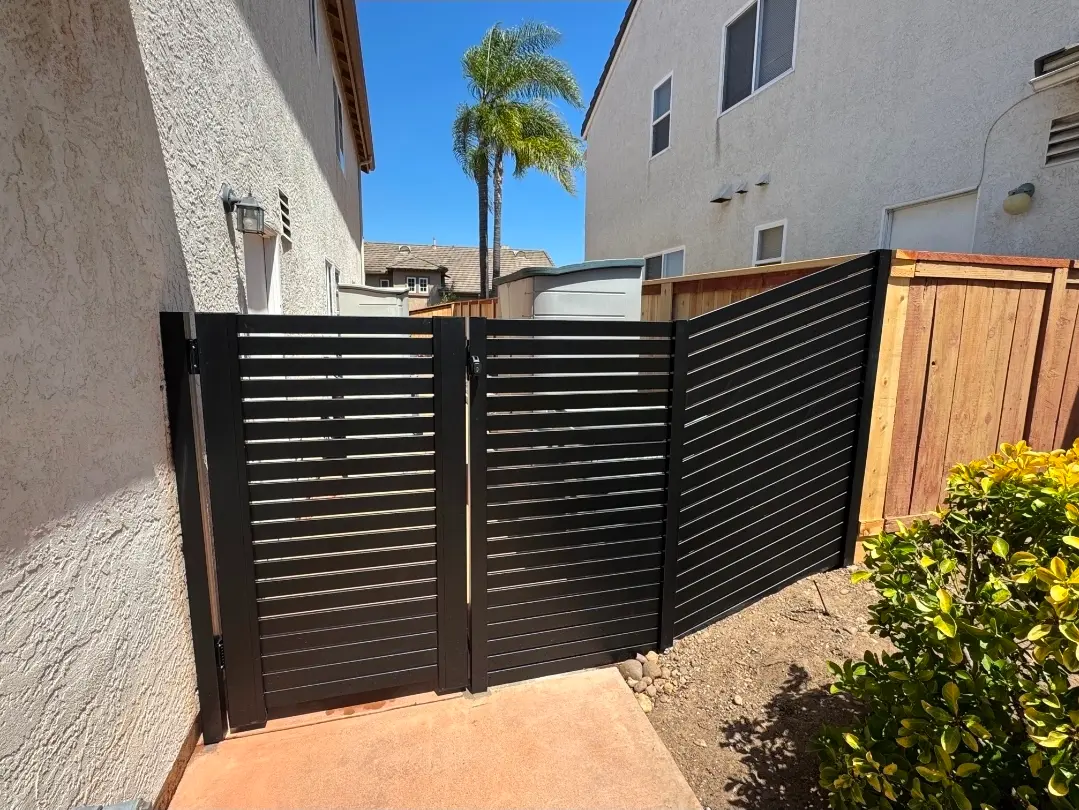
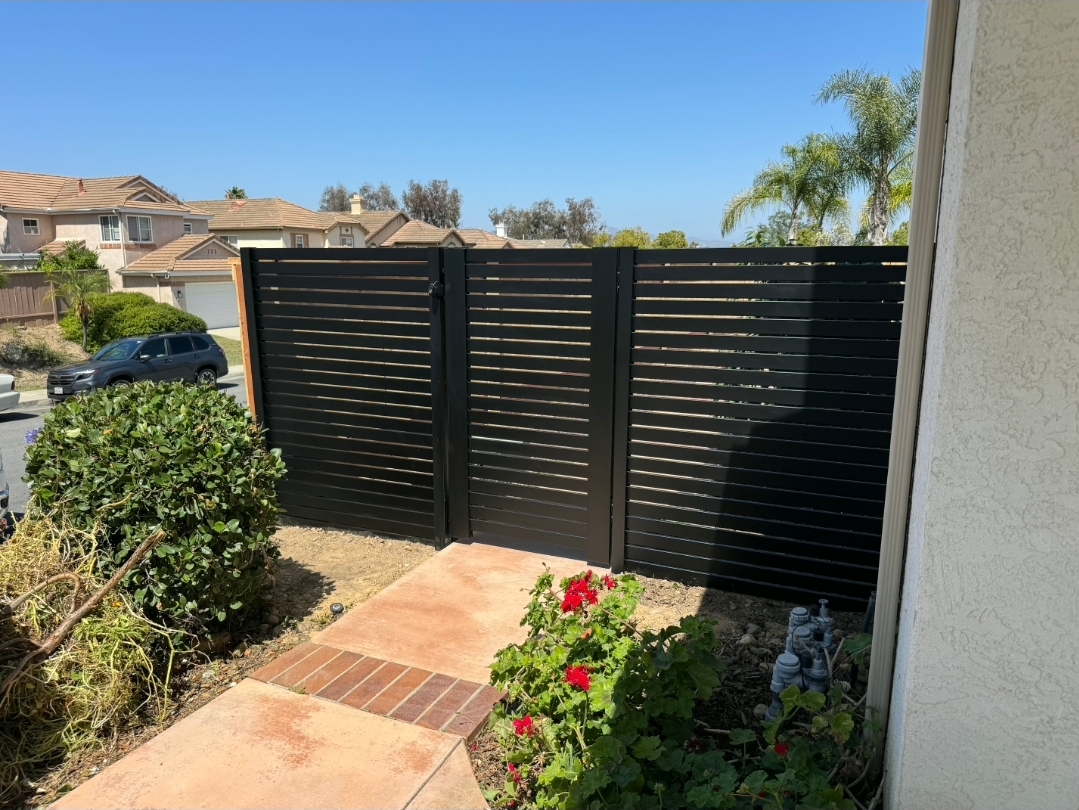
Perpendicular fences extend outward from the structure. Think of a side-yard fence that runs from the house toward the back of the property. The first 5 feet of that fence must be non-combustible. This is the partial replacement JJ’s Fence does most often. We swap out the first 5-foot section with aluminum privacy panels and tie it into the existing fence.
Parallel fences run alongside the structure, like a fence that follows the length of a side yard close to the house. If a combustible parallel fence creates a continuous fuel pathway to the structure, it needs to be replaced with non-combustible material. Vinyl and FRTW have conditional exceptions for parallel installations (see below).
What Materials Qualify
Qualifying non-combustible materials per the City of San Diego guidelines:
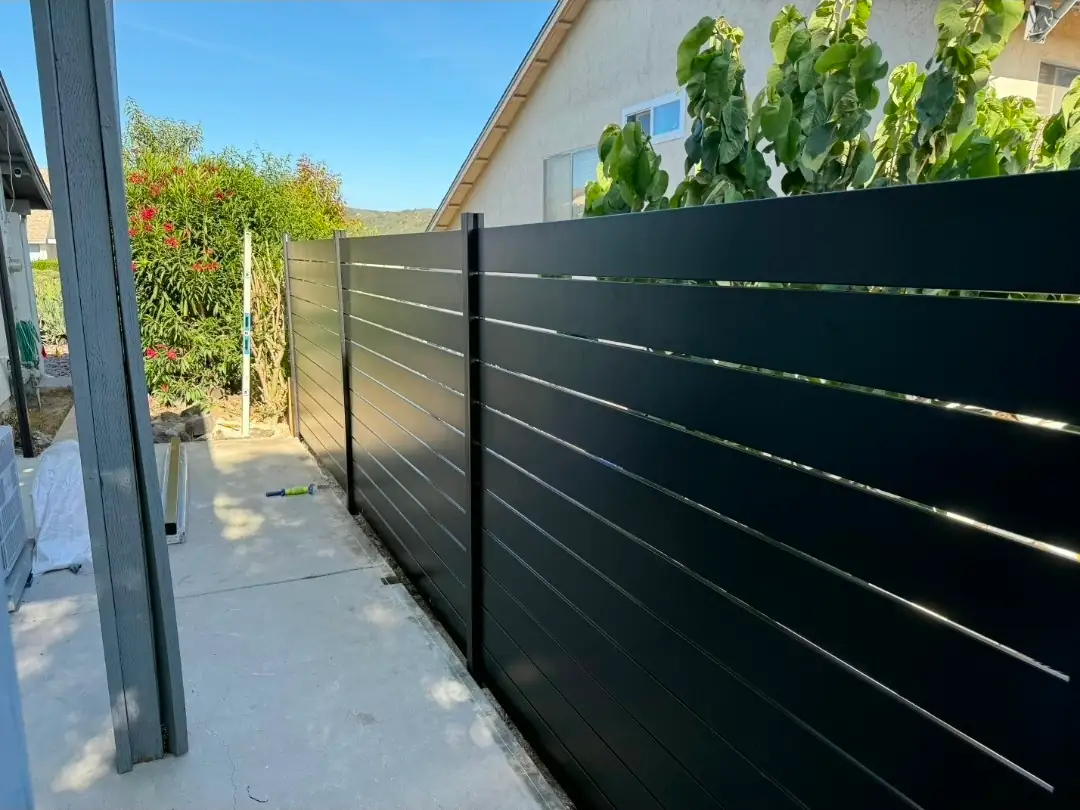
Aluminum (minimum 26-gauge). JJ’s Fence’s primary Zone 0 material. The aluminum we install is a full privacy panel, not the ornamental picket-style most people picture. Same solid look as a wood fence, just non-combustible.
Wrought iron. What the industry calls wrought iron is actually pre-galvanized steel with a powder-coated finish. Great for security and curb appeal, but it’s an open design with no privacy.
Masonry. Concrete block walls. These require a masonry contractor and may need engineering and permits for walls over 4 feet.
Fire-retardant treated wood (FRTW). Specialty product meeting ASTM E84 standards. Not commonly stocked, priced at a premium over standard cedar. New parallel FRTW is permitted under the same conditions as the vinyl exception if it’s on the State Fire Marshal’s WUI Products Handbook.
For a full comparison of pricing and tradeoffs, see the materials guide.
The Vinyl Exception
Vinyl gets a conditional exception, but only in specific configurations.
Existing vinyl can stay within Zone 0 if all of these are true: the fence runs parallel to the structure (not perpendicular), it sits at least 4 feet from the structure, it’s maintained and free of debris, and there’s no vegetation between the fence and the house.
If any of those conditions aren’t met, the vinyl needs to be replaced. And if a vinyl fence extends perpendicular from the structure, the first 5 feet must be non-combustible regardless of material.
One important caveat: the guidelines note that your insurance company may not allow vinyl within 5 feet of a structure at all, even if it meets the city’s exception criteria. Check with your agent.
What About Wood?
Standard untreated wood in Zone 0 generally needs to be replaced. The guidelines do note that existing wood “may be permitted where it does not create a continuous fuel pathway or increase the potential for ember ignition and fire spread, as determined by the fire code official.” That’s a case-by-case judgment, not a blanket exception. For most homeowners with wood fencing in the 5-foot buffer, plan to replace it.
Real-World Examples
Side-yard wood fence, 3 feet from the house. The fence runs 30 feet parallel to the side of the house. The entire run is within Zone 0. The full side needs to be replaced with non-combustible material.
Backyard fence, house set back from the property line. The back fence sits 15 feet from the house. It’s well outside the 5-foot buffer. No Zone 0 action needed.
Wood fence connecting to the garage. The fence attaches to the garage wall and extends outward along the property line. The first 5 feet from the garage falls in Zone 0 and needs to be replaced. The rest can stay. This is JJ’s Fence’s most common partial replacement.
Vinyl fence parallel to the house, 4.5 feet away. The fence runs parallel to the structure, sits more than 4 feet away, is maintained, and has no vegetation between fence and house. This vinyl may qualify for the exception. We’ll assess during the site visit, but check with your insurer too.
What This Means for Your Wallet
The 5-foot rule is why most Zone 0 projects are smaller and cheaper than homeowners expect. Instead of replacing 100 feet of fence, you might only need to replace 5 to 10 feet.
A partial replacement with aluminum runs $2,000 to $2,500 without a gate. Gate sections start at $3,000. Compare that to a full perimeter replacement at $5,000 to $15,000+. The full cost guide breaks down pricing by material and project type.
How to Figure Out What’s in Your Zone 0
Walk your property with a tape measure. Start at the exterior wall of the house and measure 5 feet out. Do the same from the garage and any attached structures. Mark where the 5-foot line crosses your fence.
If you’d rather skip the measuring, call JJ’s Fence at (858) 285-4085 or request a quote. We come out, measure the buffer, and show you exactly what falls inside Zone 0 and what doesn’t. No cost, no obligation.
Not sure if Zone 0 applies to your property at all? Check your address first.
FAQ
Q: Does Zone 0 require me to replace my entire fence? A: No. Zone 0 only covers the first 5 feet from the structure. If your fence extends beyond that, only the section within the buffer needs to change. Most homeowners replace 5 to 10 feet of fence, not the entire property line.
Q: What if my fence is exactly 5 feet from the house? A: If the fence sits right at the 5-foot mark, it’s at the edge of Zone 0. JJ’s Fence will measure precisely during the assessment and let you know whether any portion falls inside the buffer.
Q: Can vinyl stay within Zone 0? A: In some cases. Existing vinyl can stay if it runs parallel to the structure, sits at least 4 feet away, is maintained free of debris, and has no vegetation between fence and house. Vinyl extending perpendicular from the structure needs the first 5 feet replaced with non-combustible material. Your insurer may have stricter requirements.
Q: What counts as an “attached structure” for Zone 0? A: The house, garage, attached decks, pergolas, carports, and any other structure connected to the home. Detached sheds or outbuildings in Zone 0 have their own requirements but don’t extend the 5-foot buffer from the main house.