Your fence was legal when you built it. But California changed the rules, and thousands of San Diego homeowners now have fences that don’t meet code. Here’s what happened.
What AB 3074 Actually Did
In 2020, California passed Assembly Bill 3074. The bill added a new layer to the state’s defensible space requirements: Zone 0, a 5-foot buffer directly around your home where everything needs to be non-combustible or fire-resistant.
Before AB 3074, California’s defensible space rules started at 5 feet from the structure (Zone 1) and extended outward. The area right next to the house wasn’t specifically addressed. AB 3074 filled that gap after fire science research showed that the 0-to-5-foot perimeter is where ember intrusion does the most damage.
Then came SB 504 in 2024, which extended these requirements to Local Responsibility Areas. That’s what brought cities like San Diego and Poway into scope. Before SB 504, Zone 0 mostly applied to unincorporated areas managed by CAL FIRE.
Why Fences Are the Biggest Issue
When most people hear “defensible space,” they think of vegetation: clearing brush, trimming trees, maintaining a gravel perimeter. And vegetation is part of it.
But fences are the structural flashpoint that catches homeowners off guard. A wood fence attached to the house is essentially a fuse. Embers land on it, the wood catches, and the fire follows the fence line straight to the wall, eave, or deck.
That’s why Zone 0 specifically targets fences, gates, arbors, trellises, and any combustible structure within 5 feet of the building.
What “Not Legal” Actually Means
If your property is in a Very High or High Fire Hazard Severity Zone and you have a wood or composite fence within 5 feet of your home, that fence doesn’t meet the new Zone 0 standard.
That doesn’t mean someone is going to knock on your door tomorrow. But it does mean you’re on a compliance clock.
The state deadline for VHFHSZ properties is January 1, 2027. High fire hazard zone properties have until January 1, 2028. The City of San Diego and other local jurisdictions may set their own timelines, so check with your local building department for the most current schedule.
There is no grandfathering clause. It doesn’t matter when the fence was built or whether it was up to code at the time.
The Vinyl Question
One of the most common questions we get: “Does my vinyl fence have to go?”
The answer is more nuanced than most people think. Per the City of San Diego’s Zone 0 Guidelines, vinyl can stay if the fence is perpendicular to the building wall and at least 5 feet from any door or window opening.
Vinyl that runs parallel to the wall, or within 5 feet of an opening, must be replaced.
So “vinyl doesn’t qualify” is not quite right. It depends on how the fence is positioned relative to the house.
How to Know If AB 3074 Affects You
Two things have to be true for Zone 0 to apply to your fence:
- Your property is in a designated fire hazard zone (Very High or High)
- You have combustible or non-qualifying fencing within 5 feet of the structure
The first question is easy to answer. Use our free Zone 0 Checker and enter your address. It checks City of San Diego, Poway, and CAL FIRE data and tells you your zone classification in about 10 seconds.
The second question takes a walk around your house. Look at what’s within 5 feet of the walls, attached deck, garage, and any other attached structure.
What Your Options Are
If AB 3074 does affect your fence, you’ve got a few paths:
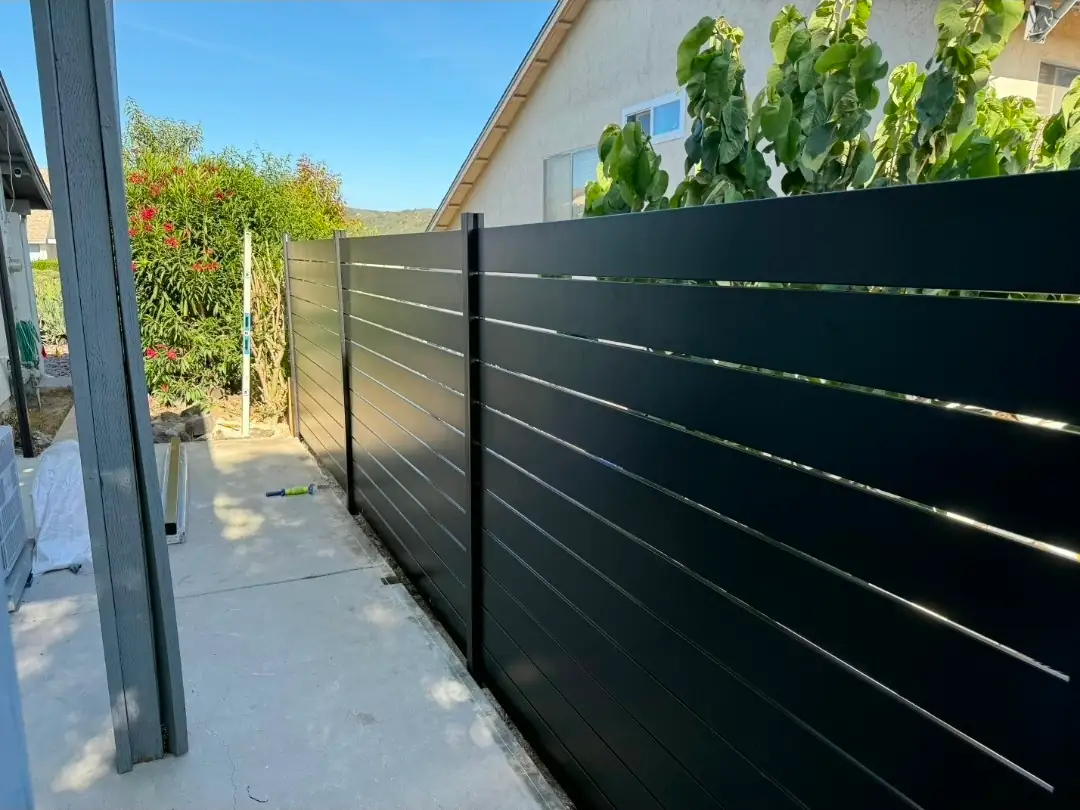
Partial replacement. If only the first 5 feet of your fence falls in Zone 0, replace just that section with aluminum or steel and tie it into the existing fence. This is what most of our customers choose. It’s the most budget-friendly route and gets you compliant without tearing out a perfectly good fence.
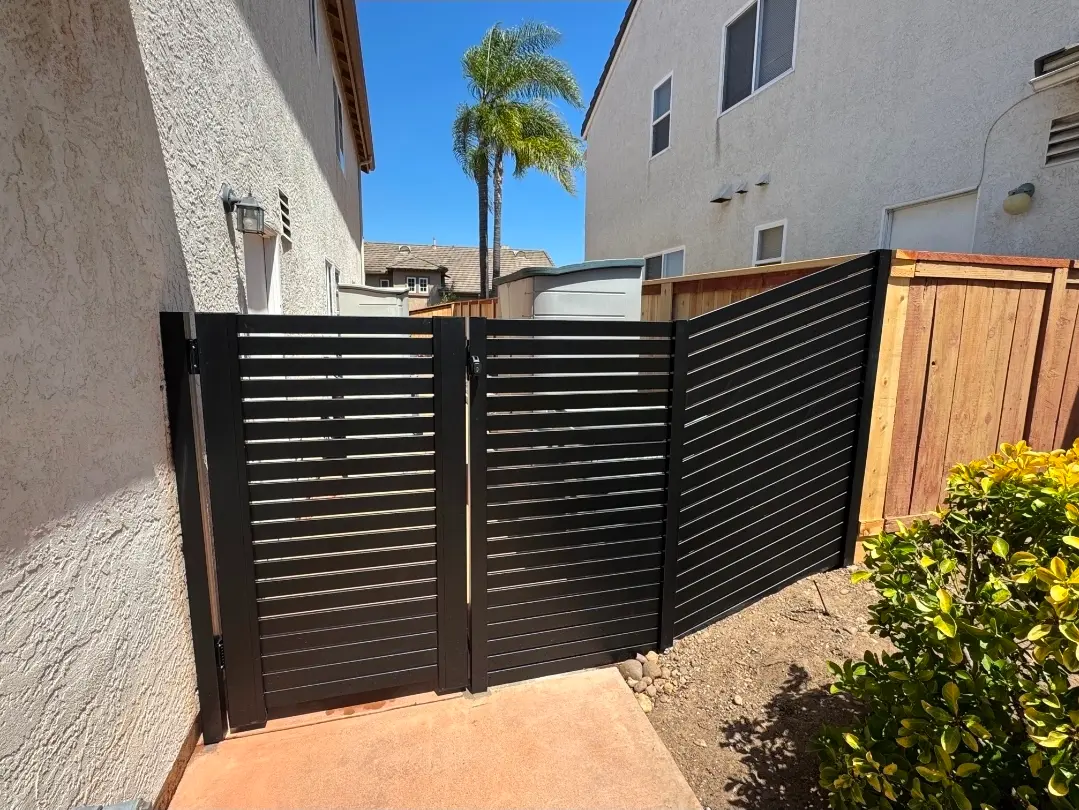
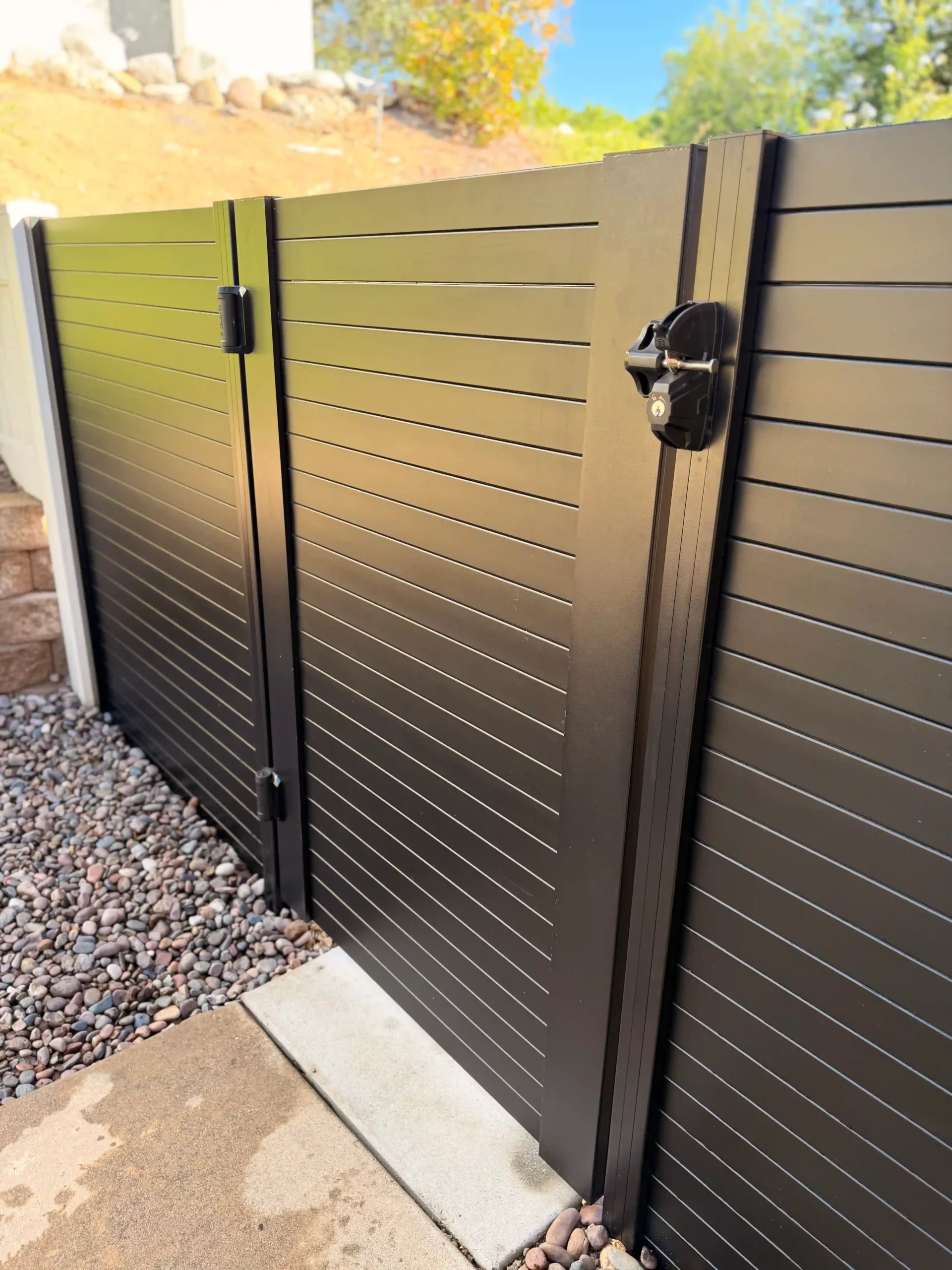
Full replacement. If you want to upgrade the whole run, aluminum is the top recommendation. Non-combustible, rust-resistant, meets pool code, and looks clean for decades. Steel and wrought iron are solid alternatives for homeowners who want extra security or a heavier look.
FRTW (fire-retardant treated wood). If you want to keep a wood look, fire-retardant treated wood that meets ASTM E84 standards is an approved material. It’s a specialty product and harder to source, but it’s an option.
Don’t Wait for the Rush
Fence contractors in San Diego are going to get slammed as the compliance deadlines approach. That’s not a sales pitch. It’s math. Thousands of homes in San Diego County are affected, and there are only so many crews.
Getting a quote now means you can pick your timeline, lock in pricing, and avoid waiting weeks for an install slot.
Call JJ’s Fence at (858) 285-4085 or request a free quote online. We’ll come out, measure your Zone 0 buffer, and give you a straight price.
FAQ
Q: What is AB 3074? A: AB 3074 is a California law passed in 2020 that created Zone 0, a 5-foot defensible space buffer around homes in fire hazard zones. It requires non-combustible or fire-resistant materials within that buffer, including fences.
Q: Does AB 3074 apply to all of San Diego? A: It applies to properties in designated fire hazard zones (Very High and High). Not every parcel in San Diego is affected. Check your address here to find out.
Q: Is there a grace period? A: No grandfathering. The state deadline for VHFHSZ is January 1, 2027. High zones have until January 1, 2028. Local jurisdictions may set their own timelines.
JJ’s Fence Company is a veteran-owned, licensed (CA #1122878) fence contractor serving San Diego County. Call (858) 285-4085 for a free Zone 0 assessment.