California’s Zone 0 compliance deadlines are phased, which means not everyone is on the same clock. And local jurisdictions like the City of San Diego can set their own timelines on top of the state deadlines.
Here’s what San Diego homeowners need to know about when these requirements actually kick in.
The State-Level Timeline
California’s Zone 0 framework was built through two laws over four years:
2020: AB 3074 passes. This bill created Zone 0, the 5-foot defensible space buffer around structures. It applied initially to State Responsibility Areas (SRAs), which are mostly unincorporated, wildland-adjacent areas managed by CAL FIRE. Here’s what AB 3074 changed for San Diego homeowners.
2024: SB 504 passes. This bill extended Zone 0 to Local Responsibility Areas (LRAs), bringing cities like San Diego and Poway into scope. Before SB 504, urban fire hazard zones weren’t covered by Zone 0 requirements.
January 1, 2027: VHFHSZ compliance deadline. Properties in Very High Fire Hazard Severity Zones must meet Zone 0 requirements by this date. This is the first wave and covers the highest-risk areas.
January 1, 2028: High FHSZ compliance deadline. Properties in High fire hazard zones have an additional year. This second wave extends the requirements to areas that are elevated risk but not the highest classification.
The Local Layer
Here’s where it gets more specific to San Diego. The state deadlines set the floor, but local jurisdictions can go further.
The City of San Diego has already taken action beyond the statewide maps. The city re-designated its Moderate and High FHSZ areas to Very High, and added a 500-foot ember cast buffer beyond the state’s mapped boundaries. That means more properties in San Diego may be classified as VHFHSZ under the city’s maps than under CAL FIRE’s statewide data.
The city’s Zone 0 Guidelines for Existing Structures (Rev. 4/22/2026) also establish local material standards, including the 26-gauge minimum for aluminum and the vinyl perpendicular/parallel rules.
Other jurisdictions in San Diego County, including Poway, Encinitas, and Escondido, may adopt their own timelines and standards. Check with your local building department for the most current requirements.
What “Compliance” Actually Means
Meeting the deadline means having all fencing, gates, arbors, trellises, and other fence-like structures within 5 feet of your home built from qualifying materials by the applicable date.
Qualifying materials include aluminum (minimum 26-gauge), wrought iron, masonry, and fire-retardant treated wood meeting ASTM E84 standards. What the industry calls “wrought iron” is actually pre-galvanized steel with a powder-coated finish. Both terms refer to the same product. See how all the qualifying materials compare.
Vinyl has a conditional exception: it can stay if perpendicular to the building wall and at least 5 feet from any door or window.
Standard wood and composite fencing in the Zone 0 buffer must be replaced regardless of when it was installed. There is no grandfathering.
The 4-Foot Setback
One more rule to know about: the City of San Diego’s Zone 0 guidelines require fences to be at least 4 feet from the structure. This is separate from the 5-foot material rule. If your fence sits at 4 feet 9 inches from the house, it’s within the 5-foot Zone 0 buffer (so it needs to be non-combustible) but clears the 4-foot setback (so the placement is fine).
This comes up a lot in side yards where fences run close to the house. If your fence is at or above the 4-foot mark, you’re within the city guideline. In practice, your insurance company’s standards are what matter most.
A Practical Timeline for Homeowners
If you’re in a VHFHSZ with a January 2027 state deadline, here’s a realistic planning timeline:
Now through summer 2026: Get your zone confirmed. Check your address with our free checker tool. Walk your property. Identify what’s in the 5-foot buffer.
Summer through fall 2026: Get quotes. Compare materials and contractors. Budget for the work. Fence contractors will start getting busier as more homeowners realize the deadline is approaching.
Fall 2026 through early 2027: Schedule and complete the work. The closer you get to the deadline, the harder it will be to book a contractor. Most residential Zone 0 fence jobs with JJ’s Fence take one to two days once we’re on-site.
If you’re in a High zone with a January 2028 deadline, you have more time, but the same advice applies. Getting ahead means better scheduling and pricing.
Why Early Action Matters
This isn’t a deadline where you can call a contractor on December 15 and expect to be compliant by January 1. Here’s why.
Contractor availability. Thousands of San Diego properties are affected. The fence installation industry in San Diego isn’t built to handle a compliance rush. Crews that are available now will be booked solid in late 2026.
Material lead times. Aluminum and wrought iron fencing are typically in stock or available within a week. But during high-demand periods, lead times stretch. FRTW (fire-retardant treated wood) already has limited sourcing and may take longer.
Permitting. Most Zone 0 replacements don’t need a separate permit, but if yours does, that adds processing time.
Budgeting. A partial replacement runs $2,000 to $2,500 without a gate. Gate sections start at $3,000. A full perimeter could be $5,000 to $15,000+. Either way, knowing the number now lets you plan rather than scramble.
The Most Common Zone 0 Project
Most homeowners don’t need to replace their entire fence. Zone 0 only covers the first 5 feet from the structure. If your fence runs 40 feet along the property line, only the section closest to the house needs to change.
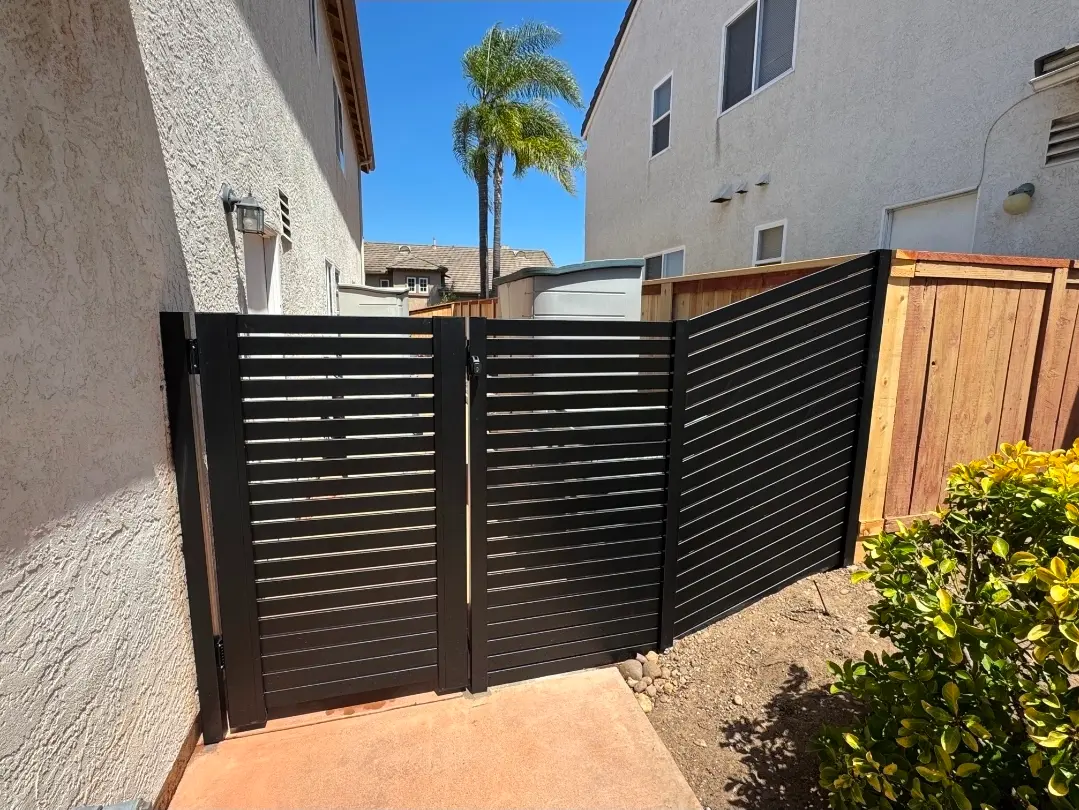
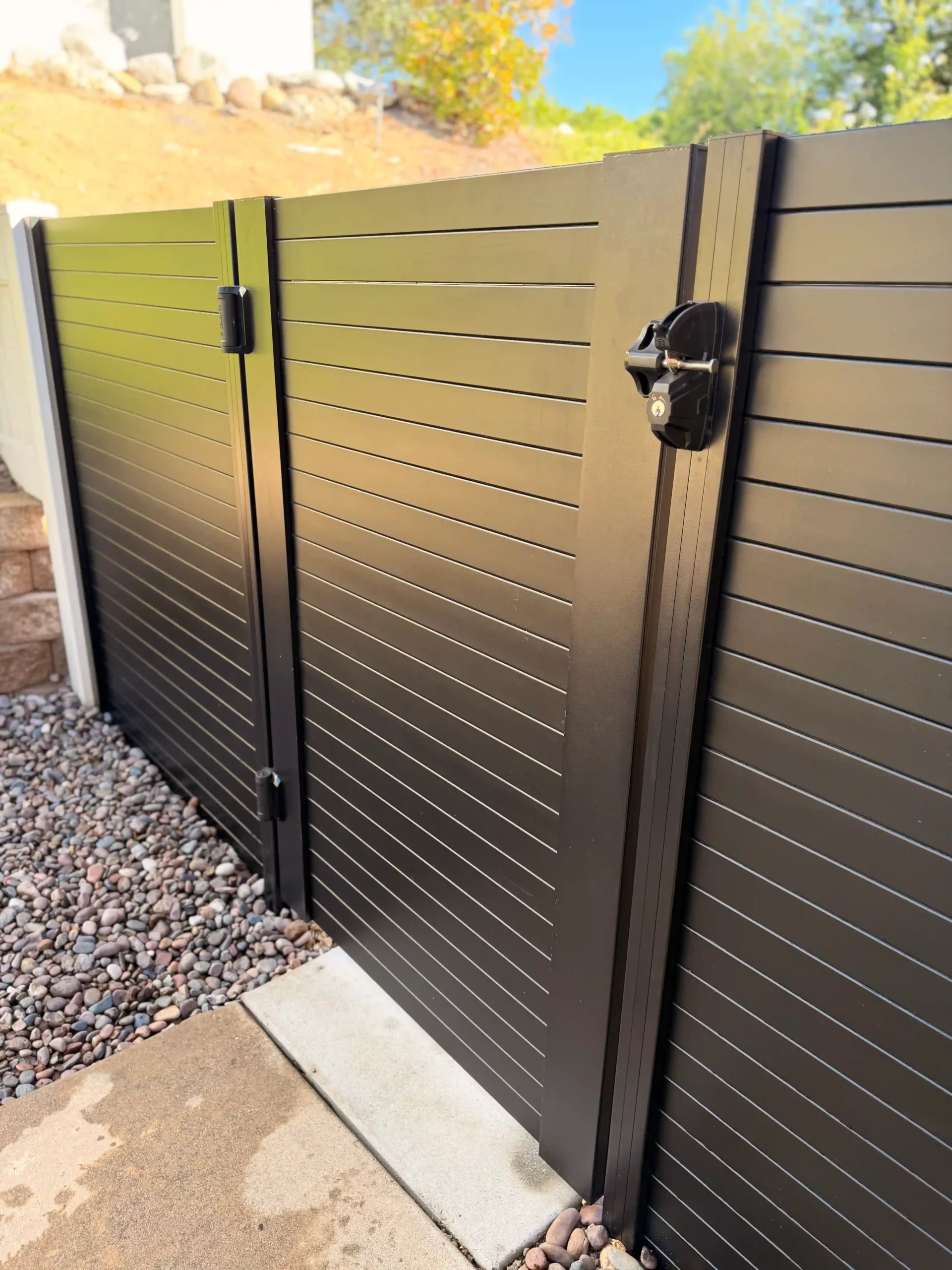
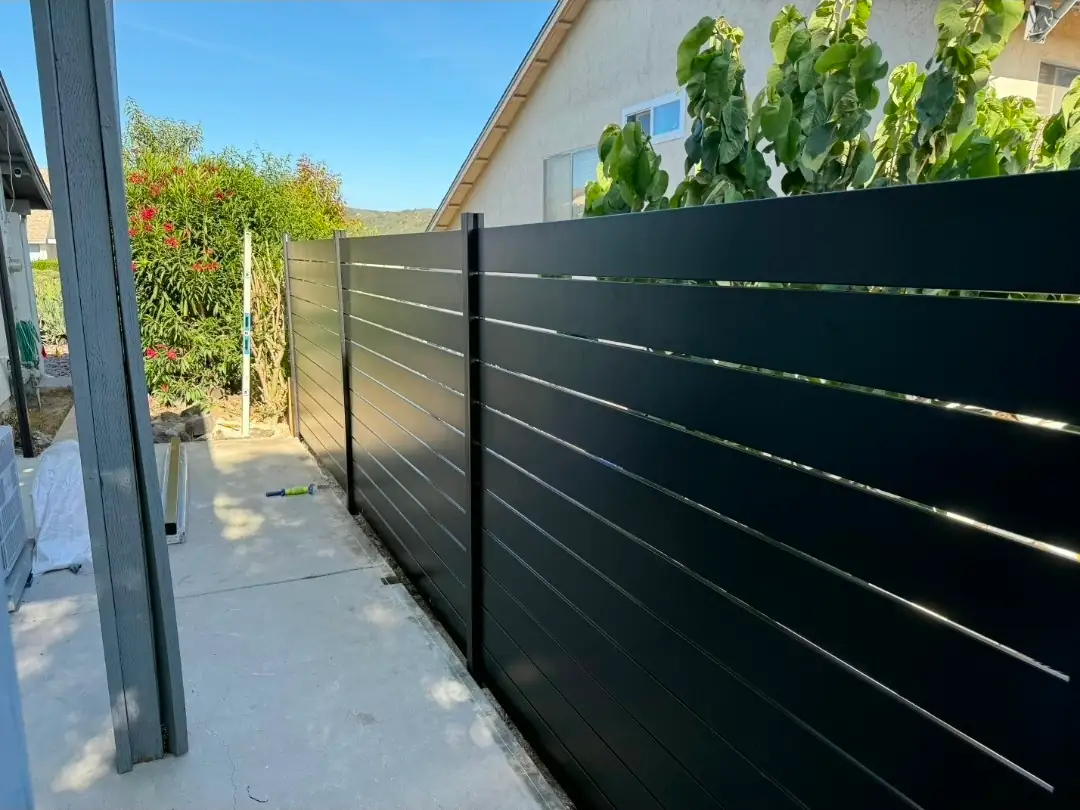
JJ’s Fence does partial replacements all the time. We swap out the 5-foot Zone 0 section with aluminum privacy panels and tie it into the existing fence. The aluminum we install is a full privacy panel, not the ornamental picket-style most people picture. You get the same solid look as a wood fence, just non-combustible.
This is the fastest, most cost-effective path to compliance. See full pricing for every project type.
Insurance: The Real Enforcement Mechanism
Here’s something most homeowners don’t realize: in practice, your homeowners insurance company enforces Zone 0 compliance, not the city. The City of San Diego has stated it will enforce these requirements, but the scale of the city makes that impractical. Your insurer is the one tying coverage and premiums to defensible space compliance. Some carriers are dropping homeowners in fire zones entirely.
Missing the deadline doesn’t just mean a potential code violation. It means your insurance company may have grounds to raise your premium, restrict your coverage, or non-renew your policy. Getting compliant before the deadline protects your home and your policy.
One important caveat: insurance requirements may differ from building code. Your insurer might require stricter standards than what the code asks for. It’s worth a conversation with your agent before you finalize any fence replacement plan.
How to Get Started
Step 1: Check your address to confirm your fire hazard zone classification. Takes about 10 seconds.
Step 2: Call JJ’s Fence at (858) 285-4085 or fill out the quote form. We’ll come out, measure your Zone 0 buffer, and give you a price and timeline.
Step 3: Pick a date that works for you. Lock it in before the schedule fills up.
FAQ
Q: What is the Zone 0 compliance deadline for San Diego? A: The state deadline is January 1, 2027 for Very High Fire Hazard Severity Zone properties and January 1, 2028 for High fire hazard zones. The City of San Diego may adopt additional local timelines. Check with your building department for the most current schedule.
Q: Is there a grace period or grandfathering for existing fences? A: No. There is no grandfathering. Even fences that were code-compliant when built must meet the new Zone 0 standard by the applicable deadline.
Q: What happens if I miss the deadline? A: In practice, enforcement comes from your homeowners insurance company, not the city. The City of San Diego has stated it will enforce but cannot practically do so at scale. Missing the deadline could affect your insurance coverage, premiums, or renewal. Getting compliant protects your home and your policy.
Q: What’s the most affordable way to meet the deadline? A: A partial replacement, swapping just the 5-foot Zone 0 section with aluminum, is the most targeted option. JJ’s Fence Company in San Diego does these for $2,000 to $2,500 without a gate. Gate sections start at $3,000. See the full cost breakdown.
Q: Do I have to replace my entire fence? A: Probably not. Zone 0 only covers the first 5 feet from the structure. If your fence extends beyond that, only the section within the buffer needs to change. JJ’s Fence does partial replacements that tie the new aluminum section into your existing fence.
JJ’s Fence Company is a veteran-owned, licensed (CA #1122878) fence contractor serving San Diego County. Call (858) 285-4085 for a free Zone 0 assessment.