San Diego homeowners in fire zones are dealing with two problems at the same time: complying with California’s new Zone 0 fence requirements and keeping their home insurance.
Here’s what most people don’t realize: those two problems are actually the same problem. In practice, your homeowners insurance company is the one enforcing Zone 0 compliance, not the city. The City of San Diego has stated it will enforce, but the scale of the city makes that impractical. Your insurer is the one that matters.
We’re a fence company, not an insurance agency. But we hear enough from our customers to know how this plays out in the real world. Here’s what we’ve seen.
What’s Happening with Insurance in San Diego Fire Zones
California’s home insurance market has been tightening for years, and the wildfire seasons of 2017 through 2025 accelerated it. Insurers are pulling out of high-risk areas, raising premiums, or refusing to renew policies.
San Diego homeowners in Very High and High fire hazard zones are right in the crosshairs. Some are getting non-renewal notices after years with the same carrier. Others are seeing premium increases of 30% or more.
The insurers’ logic is simple: homes in fire zones are expensive to insure, and anything that increases the risk of a claim makes the math worse.
Where Fences Fit In
Your fence probably isn’t the first thing your insurer looks at. They’re evaluating roof material, vegetation clearance, proximity to wildland, access roads, and the overall defensible space picture.
But fences are part of that picture. A wood fence attached to the house is a direct fire pathway from the perimeter to the structure. Embers land on it, the wood catches, and the fire follows the fence to the wall or eave.
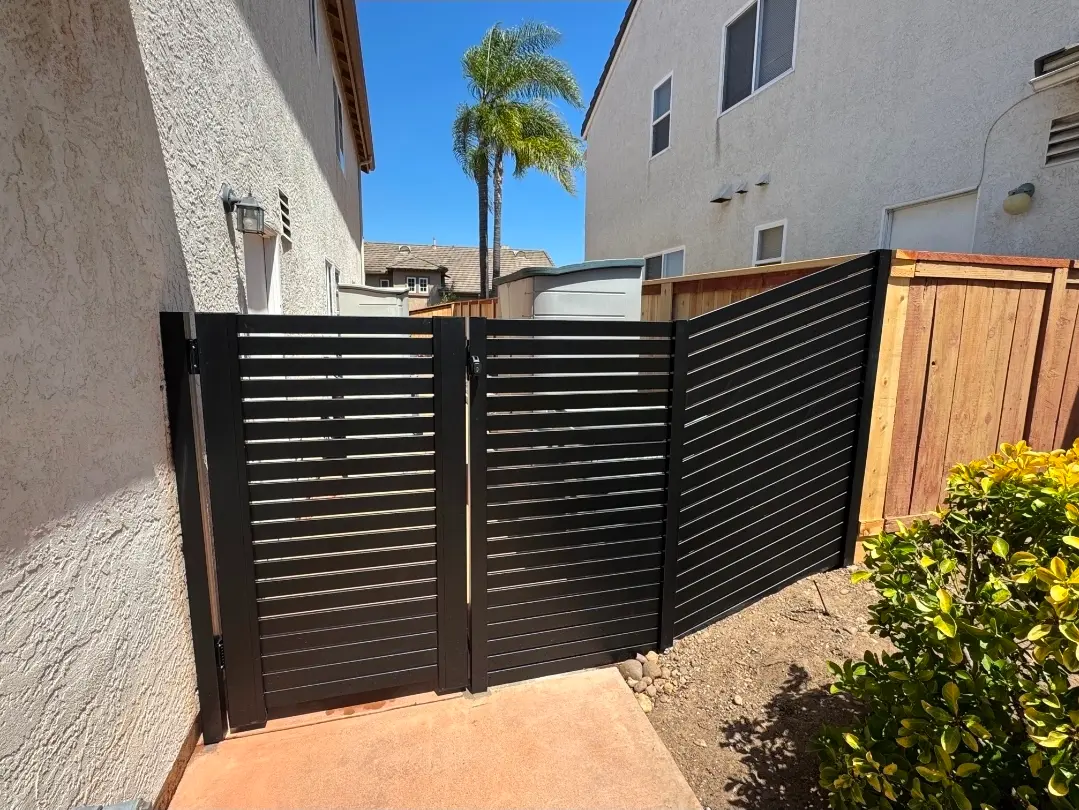
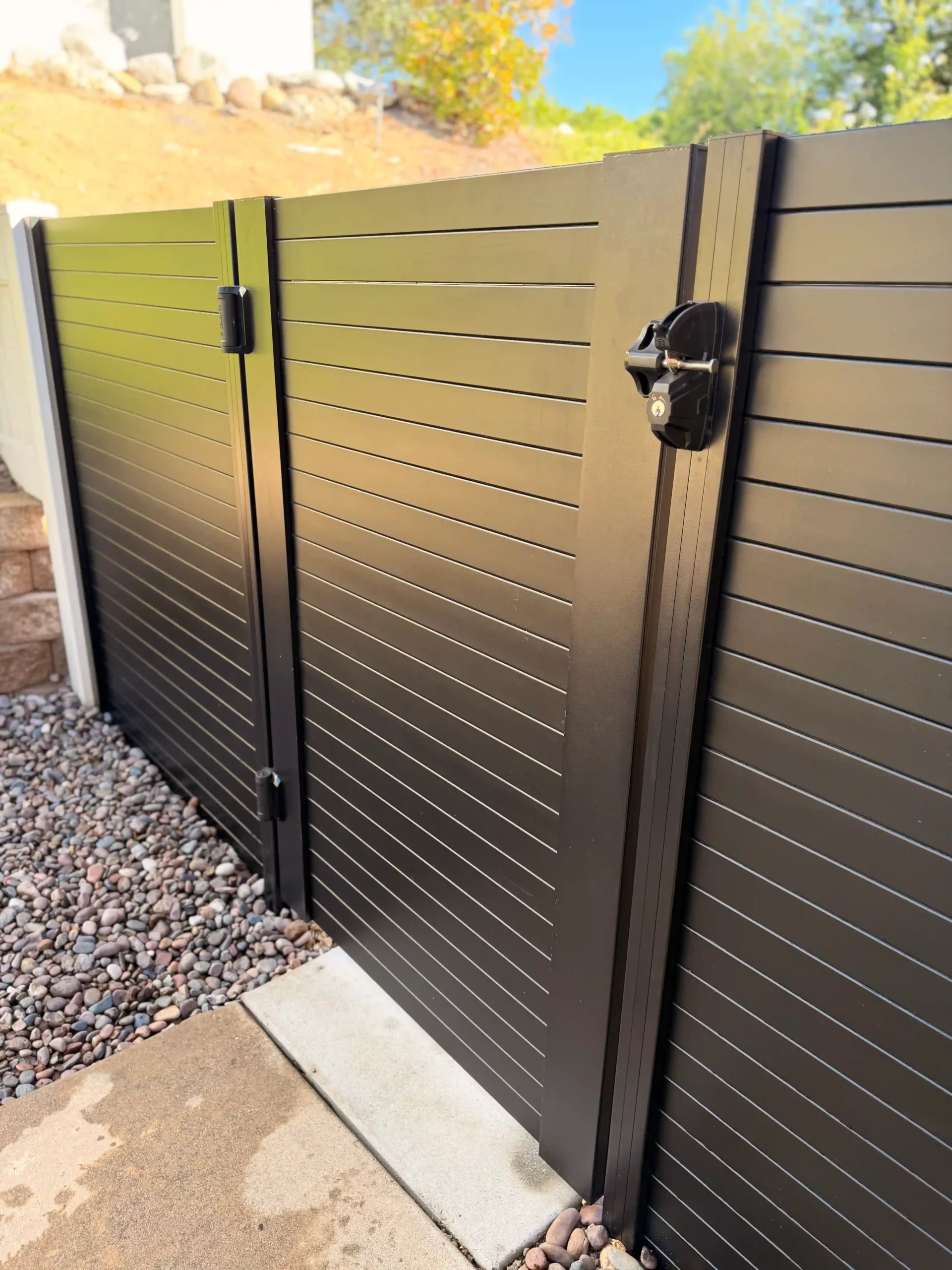
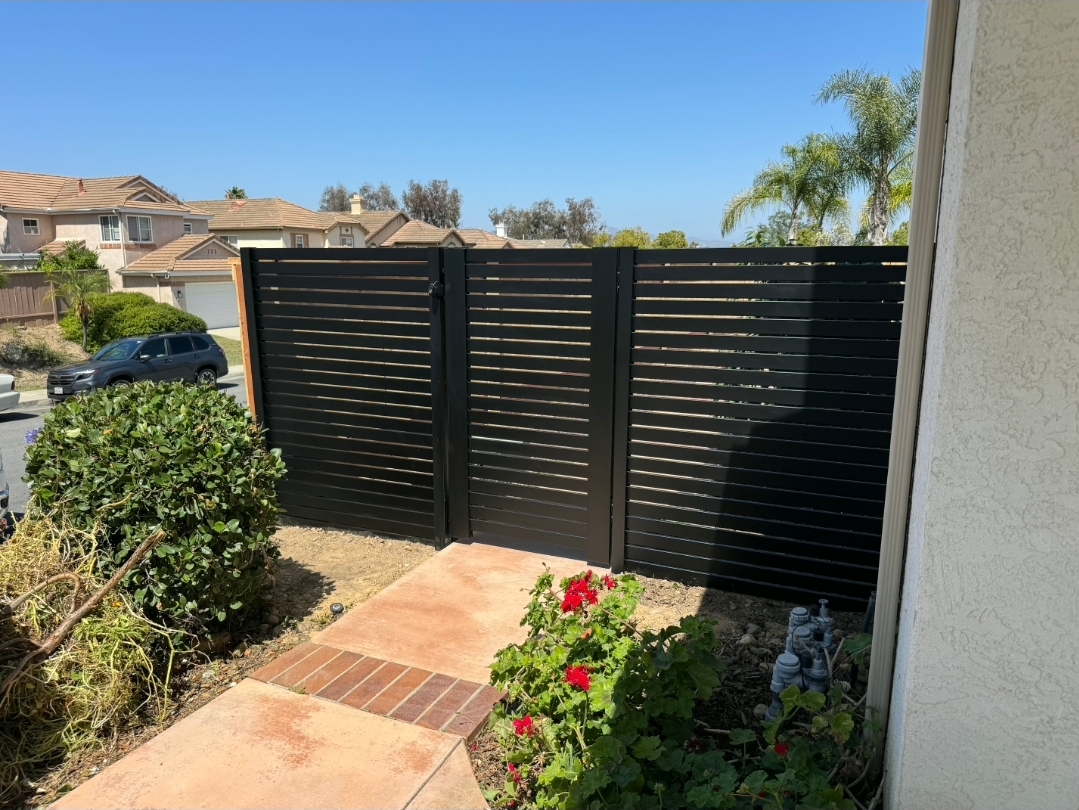
Replacing that wood fence with aluminum, wrought iron, or another non-combustible material eliminates that pathway. It’s one less ignition risk your insurer can point to. The aluminum we install at JJ’s Fence is a full privacy panel, not the ornamental picket-style most people picture. You get the same solid look as a wood fence, just non-combustible and built to last.
What We Hear from Homeowners
We don’t track insurance outcomes for our customers. We build fences. But here’s what we hear regularly:
Some homeowners tell us that getting their Zone 0 in order helped with renewal conversations. They were able to show their insurer that the property met defensible space standards, and the non-renewal was reversed or the premium stabilized.
Others have told us their agent specifically asked about fencing materials as part of a defensible space assessment.
We’ve also heard from homeowners who completed Zone 0 compliance and still faced premium increases or non-renewals. A compliant fence doesn’t guarantee anything on the insurance side.
The Important Caveat
Insurance requirements may differ from building code requirements.
This is the part most people miss. California’s Zone 0 building code has specific rules about what materials qualify, including conditional exceptions for vinyl fencing in certain configurations.
Your insurer doesn’t have to follow the building code. They can set their own standards for what they consider acceptable risk. An insurer might require fully non-combustible materials everywhere, even in situations where building code allows vinyl to remain.
So a fence that’s technically code-compliant might not satisfy your insurer’s requirements. And a fence that exceeds code might still not be enough if your insurer has other concerns about the property.
The takeaway: talk to your insurance agent before you finalize your fence replacement plan. Ask what their defensible space requirements are and whether specific materials or configurations affect your policy.
What the Research Shows
Multiple industry reports have cited 5% to 20% premium discounts for homes with documented defensible space compliance. But those numbers vary widely by carrier, by policy type, and by the overall risk profile of the property.
The California Department of Insurance has pushed insurers to give credit for wildfire mitigation, including defensible space compliance. But there’s no statewide mandate that requires a specific discount for a specific improvement.
In practice, the value of a fire-resistant fence on your insurance is indirect. It’s one piece of a larger defensible space picture. The more pieces you have in place (non-combustible fence, cleared vegetation, fire-resistant roof, ember-resistant vents), the stronger your case to your insurer.
What Makes the Strongest Case
If you want to maximize the insurance benefit of your Zone 0 compliance, document everything.
Take before and after photos of the fence replacement. Keep the receipt showing materials used (aluminum, wrought iron, etc.). Get a copy of your Zone 0 Checker result showing your fire hazard zone classification. If you have a fire inspection or defensible space assessment, keep that too.
Present this documentation to your insurer as a package. It shows you’re proactively managing the risk, not just checking a regulatory box.
What It Costs
Most homeowners don’t need to replace their entire fence. Zone 0 only covers the first 5 feet from the structure, so a partial replacement of just that section is usually the most cost-effective path. JJ’s Fence does these for $2,000 to $2,500 without a gate. Gate sections start at $3,000.
If you want a full breakdown by material and project type, the cost guide covers everything.
The Bottom Line
A fire-resistant fence won’t magically fix your insurance situation. But it removes one risk factor from the equation, and it’s a risk factor you have to address anyway under Zone 0.
If you’re already spending money to comply with the law, you might as well use it to strengthen your insurance position too.
Check your fire hazard zone and then call JJ’s Fence at (858) 285-4085 for a free quote. We’ll help you figure out what needs to change and give you documentation your insurer can work with.
FAQ
Q: Will a fire-resistant fence lower my insurance premium? A: It can help, but there’s no guarantee. A non-combustible fence removes one risk factor. Pair it with vegetation clearance and other defensible space measures for the strongest case. Talk to your insurance agent about their specific requirements.
Q: Do insurance requirements match building code for Zone 0? A: Not always. Insurance requirements may be stricter than building code. Your insurer may require non-combustible materials even where code allows conditional exceptions like vinyl. Check with your agent before finalizing your fence plan.
Q: Can I get documentation from JJ’s Fence for my insurer? A: Yes. JJ’s Fence Company provides receipts showing materials used and can document the Zone 0 compliance work. We also recommend taking before and after photos and saving your Zone 0 Checker result for your records.
Q: Who actually enforces Zone 0 in San Diego? A: In practice, your homeowners insurance company. The City of San Diego has stated it will enforce, but the scale of the city makes that impractical. Insurers are the ones tying coverage and premiums to defensible space compliance.
Q: What’s the most affordable way to get compliant? A: A partial replacement. JJ’s Fence swaps just the 5-foot Zone 0 section with aluminum privacy panels and ties it into the rest of your existing fence. Most homeowners don’t need a full tear-out. Cost runs $2,000 to $2,500 without a gate.
JJ’s Fence Company is a veteran-owned, licensed (CA #1122878) fence contractor serving San Diego County. Call (858) 285-4085 for a free Zone 0 assessment.